How Long Does a Tub of Colostrum Last? Real Monthly Cost Math
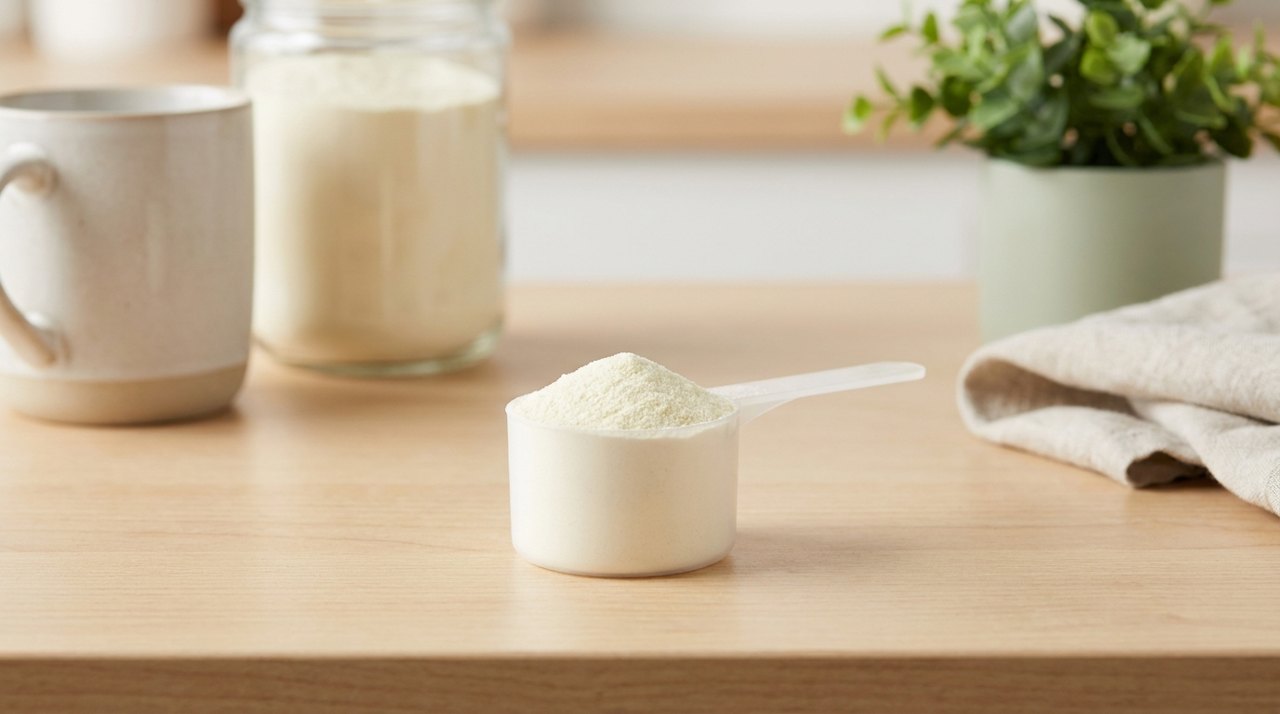
A tub of colostrum can look affordable on the shelf and turn out expensive per month — or the reverse. The label price tells you very little until you divide it by the serving size you'll actually use, the number of true servings in the container, and how many grams per day you're aiming for. Here's the simple math, worked through with realistic numbers, so you can compare any two products in about a minute.
The only formula you need
Ignore the marketing and run three quick calculations:
- Cost per gram = tub price ÷ total grams of colostrum in the tub
- Days per tub = total grams ÷ your daily dose in grams
- Monthly cost = (tub price ÷ days per tub) × 30
The trap is step one. Many tubs advertise "60 servings," but a serving might be 1 gram in one brand and 5 grams in another. Two "60-serving" tubs can differ five-fold in how long they actually last at the same daily dose. Always convert to grams before comparing — the total grams figure is usually on the nutrition panel, or you can multiply serving size by serving count.
How long a typical tub lasts
Most bovine colostrum powders come in tubs of roughly 100 g to 450 g. Common daily doses in practice range from about 1 g (a maintenance amount) to 5 g or more, though it's worth saying plainly that there is no established optimal dose — studies have used widely varying amounts, and evidence for any specific gram target is limited.
| Tub size | At 1 g/day | At 3 g/day | At 5 g/day |
|---|---|---|---|
| 100 g | ~100 days | ~33 days | ~20 days |
| 200 g | ~200 days | ~66 days | ~40 days |
| 340 g (12 oz) | ~340 days | ~113 days | ~68 days |
| 450 g (16 oz) | ~450 days | ~150 days | ~90 days |
Notice the spread: the same 100 g tub is a three-month supply at a low dose and barely three weeks at a higher one. Before you can judge value, decide what dose you intend to try — and if you're unsure, err on the smaller side to start.
Shopping for colostrum? Our current best-value pick is BIOMIXA grass-fed colostrum powder on Amazon.
Real monthly cost by price tier
Prices move around, but colostrum products tend to cluster into three rough tiers. The examples below assume a moderate 3 g/day dose:
Budget bulk powder (~$0.10–0.20 per gram)
A 340 g tub at $40–60 works out to roughly $4–18 per month at 3 g/day. This is usually the cheapest way to take colostrum, though quality documentation varies more at this tier, so check for third-party testing.
Mid-range branded powder (~$0.30–0.60 per gram)
A 120–200 g tub at $40–90 lands around $27–55 per month at 3 g/day. You're often paying for flavoring, branding, and sometimes better sourcing transparency.
Premium and heavily marketed brands (~$0.80–1.50+ per gram)
Some popular tubs cost $90–120 for 120 g or less, which is $70–130+ per month at 3 g/day. Premium pricing doesn't reliably track with premium composition — a high price may reflect marketing spend as much as the powder itself. Our buyer's guide covers which quality markers are actually worth paying for.
Capsules quietly cost more per gram
Capsules typically hold 400–500 mg each, so a "120-capsule" bottle may contain only 50–60 g of colostrum — often at a similar price to a powder tub holding two to four times as much. Reaching even 2 g/day can mean swallowing four or five capsules. If you're taking more than a gram or two daily, powder is almost always the better value; capsules mainly buy convenience and taste-avoidance. We break down the trade-offs in detail in powder vs. capsules.
Watch for these label tricks
- Servings sized to flatter the math. A tiny 500 mg serving makes "90 servings per tub" and "under $1 per serving" sound generous. Compare per gram, not per serving.
- Proprietary blends. If colostrum is mixed with fillers or other ingredients, the tub's total weight overstates how much colostrum you're getting. Look for the actual colostrum grams.
- IgG percentages without grams. "25% IgG" only means something multiplied against the real serving size. A 1 g serving at 25% IgG delivers less immunoglobulin than a 3 g serving at 15% — though keep in mind that higher IgG numbers haven't been clearly shown to translate into better real-world outcomes.
- Subscription pricing. The advertised "per month" price often assumes the smallest suggested dose. Recalculate at the dose you actually plan to take.
The bottom line
A sensible monthly budget for colostrum is roughly $10–40 if you buy powder in larger tubs, and it climbs quickly with capsules or premium branding. Since the evidence for colostrum's benefits in healthy adults is still preliminary — it's a dietary supplement, not a treatment for anything — there's a reasonable argument for starting with a modest dose from a well-tested, mid-priced powder rather than committing to a $100-per-month subscription. Run the three-step math on any tub you're considering, and you'll rarely overpay.
BIOMIXA Bluegrass Colostrum
A grass-fed, unflavored colostrum powder that balances quality and price well — our pick for the best bang for your buck. Check the current price and reviews on Amazon.