Colostrum on a Budget: How to Get Quality Without Overpaying
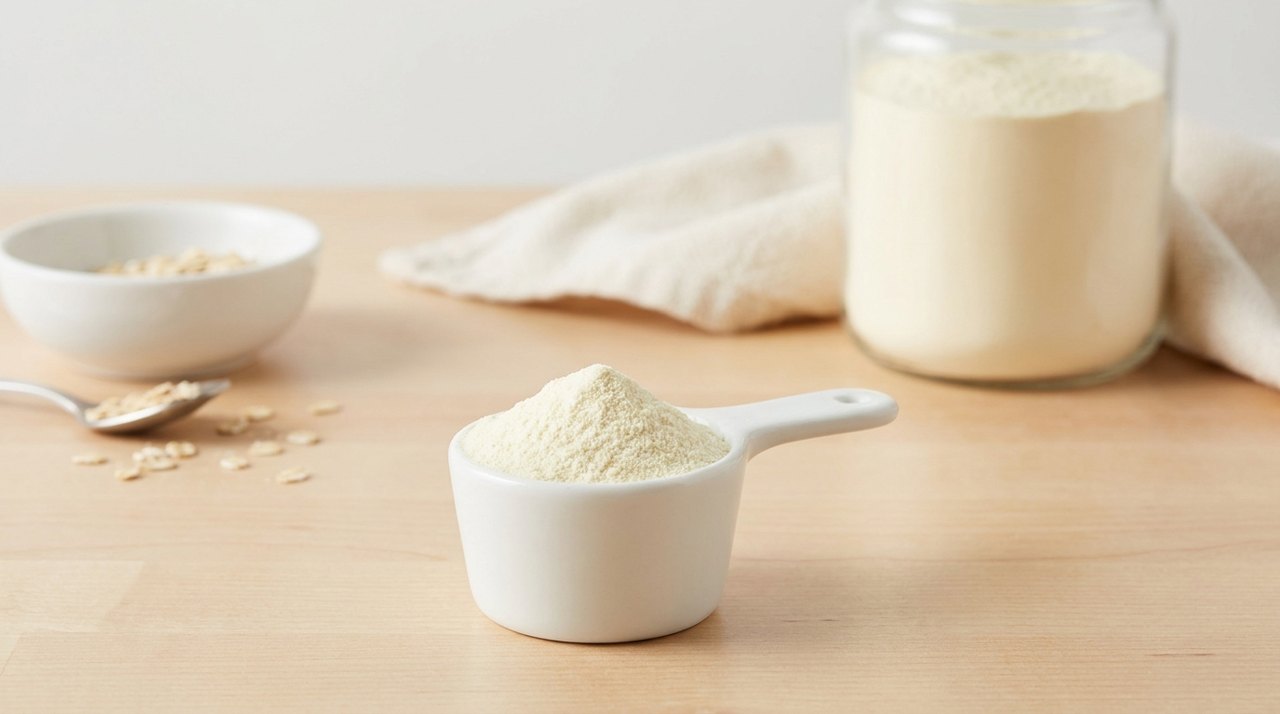
Colostrum supplements sit at the pricey end of the supplement shelf — $40 to $80 for a month's supply is common, and some premium tins push past $100. The good news is that price and quality are only loosely correlated here. A lot of what you pay for is branding, flavoring, and marketing spend rather than better raw material. Here's how to spend less without ending up with something that isn't worth taking at all.
Understand what you're actually paying for
Bovine colostrum is a genuine commodity with real supply constraints: it can only be collected in the first day or two after a cow calves, and the calf's needs come first. That baseline cost is unavoidable, and it's why colostrum will never be as cheap as whey protein.
What is avoidable is everything layered on top. Flavored, sweetened "colostrum lattes," subscription-only DTC brands with heavy influencer spend, and single-serve stick packs all carry markups that have nothing to do with the powder inside. Plain, unflavored bulk powder from a less glamorous brand is frequently the same category of ingredient at a fraction of the cost per gram.
Compare cost per gram, not cost per tub
This is the single highest-leverage habit. Tub sizes vary wildly (60 g sample tins up to 1 kg bags), and serving sizes range from 1 g to 10 g depending on what the brand wants its label to say. Two products can look similarly priced and differ by 4× in real cost.
Do the math: price ÷ total grams of colostrum in the container. For capsules, multiply capsule count by mg per capsule to get grams.
| Format | Typical price | Total colostrum | Cost per gram |
|---|---|---|---|
| Premium flavored powder | $65 | 180 g | ~$0.36 |
| Plain powder, mid-tier brand | $45 | 300 g | ~$0.15 |
| Bulk plain powder | $80 | 1000 g | ~$0.08 |
| Capsules (500 mg × 120) | $35 | 60 g | ~$0.58 |
These are illustrative ranges, not quotes — but the pattern holds consistently. Capsules are almost always the most expensive way to buy colostrum per gram, because you're paying for encapsulation and because each capsule holds very little. If convenience matters more to you than cost, that's a legitimate trade; our powder vs. capsules comparison walks through when each makes sense.
Shopping for colostrum? Our current best-value pick is BIOMIXA grass-fed colostrum powder on Amazon.
What you should not cut
Some things are worth paying for. Cutting these is how a bargain becomes a waste of money:
- Third-party testing. At minimum, a current certificate of analysis available on request. Colostrum is an animal-derived product; you want confirmation on microbial counts and heavy metals.
- A stated IgG percentage. Immunoglobulin G is the most-measured marker in colostrum research. Products commonly state 15–30% IgG. A product that won't say is asking you to trust it blindly.
- Sourcing transparency. Country of origin, and ideally confirmation that calves were fed first.
- Low-heat or spray-drying disclosure. Aggressive heat processing may degrade some proteins, though how much this affects real-world outcomes isn't well established.
The IgG-per-dollar calculation
Once you have IgG percentage, you can compare products on the metric that arguably matters most. A 300 g tub at 20% IgG for $45 gives 60 g of IgG — $0.75 per gram of IgG. A 200 g tub at 30% IgG for $60 gives 60 g of IgG for the same $60 — $1.00 per gram. The "weaker" product is the better buy. Be aware that IgG is a convenient proxy, not proof of benefit; colostrum contains lactoferrin, growth factors, and oligosaccharides too, and human evidence for most claimed effects remains limited and mixed.
Practical ways to lower your cost
- Buy plain and unflavored. Flavoring adds cost and often adds sweeteners you didn't ask for. Mix it into coffee, a smoothie, or yogurt yourself.
- Buy larger sizes once you've tested tolerance. Try a small tub first — some people get mild GI upset, and lactose-intolerant buyers may not do well with it at all. Then size up.
- Use the honest minimum dose. Many studies use doses in the range of a few grams up to 20 g daily, and there's no strong consensus that more is better. Starting at the lower end of a label's range stretches a tub considerably.
- Skip locked-in subscriptions. Take the first-order discount if there is one, but check whether the renewal price is above what you'd pay elsewhere outright.
- Watch shipping and unit thresholds. A cheaper tub with $12 shipping can lose to a pricier one with free delivery.
Red flags on cheap products
Unusually low prices sometimes signal a real problem. Be cautious about listings with no IgG claim at all, "proprietary blends" where colostrum may be a minor component diluted with milk powder or maltodextrin, unbranded marketplace sellers with no manufacturer identified, and any product making disease-treatment claims — that's both a regulatory violation and a sign the seller isn't careful about anything else.
A reasonable approach
Set a ceiling of roughly $0.15–0.25 per gram for plain powder from a brand that publishes testing and IgG content, and treat anything meaningfully above that as paying for convenience or branding. Buy small first, confirm you tolerate it and actually notice something worth continuing for, then buy in bulk. If nothing changes after a couple of months, the cheapest option is stopping — and that's a legitimate outcome, since the evidence base here is still thin. For a fuller walkthrough of quality markers, see our buyer's guide.
BIOMIXA Bluegrass Colostrum
A grass-fed, unflavored colostrum powder that balances quality and price well — our pick for the best bang for your buck. Check the current price and reviews on Amazon.