Nutricost Colostrum 30% Review: The Cheapest IgG We Found, and What It Lacks
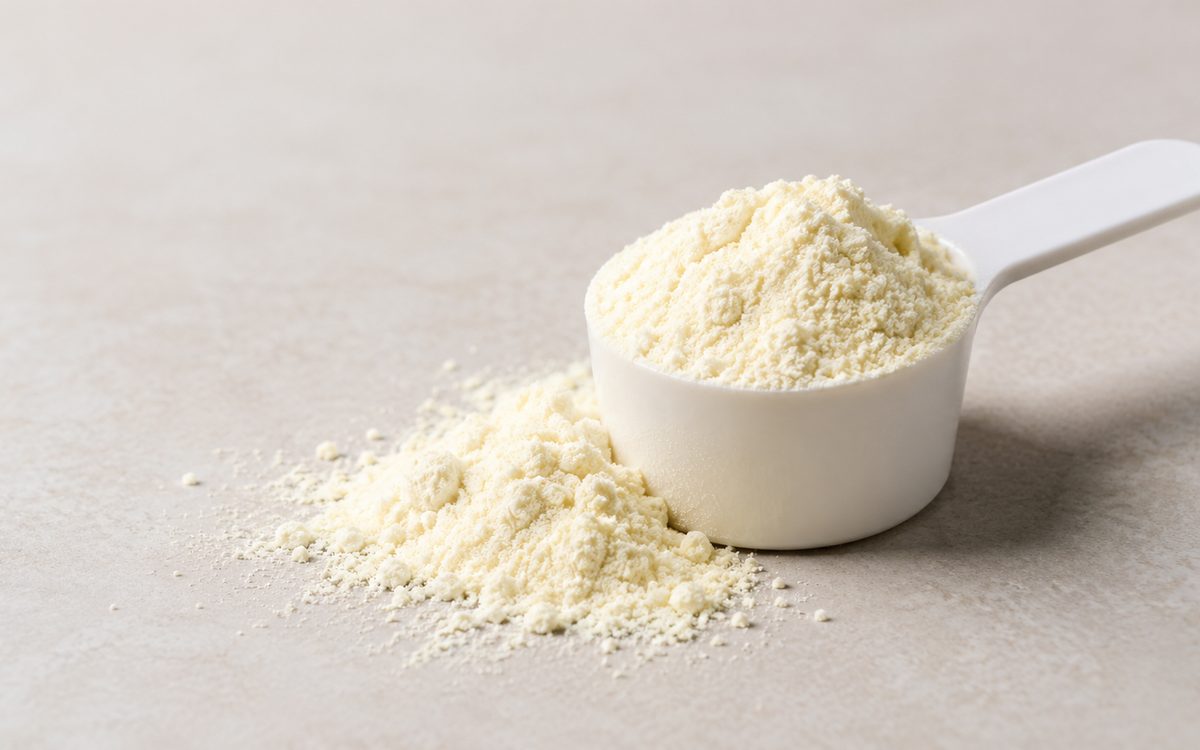
Nutricost Colostrum 30% costs about $0.59 per gram of claimed IgG as of October 2026, the lowest figure among the nine colostrum powders we track, and roughly a fifth of what the next-cheapest disclosed-IgG brand charges. The trade-off is that the label is silent on almost everything else: cow origin, milking window, fat content, drying method and any published certificate of analysis. This review walks through the arithmetic behind that price, what the label does and does not state, and how it stacks up against the other products on our 9-brand comparison table.
If you buy colostrum by the gram of IgG and can live without provenance details, Nutricost Colostrum 30% is the cheapest option we have found; if you want to know where the colostrum came from or how it was dried, the label will not tell you.
- $39.95 for 227 g (8 oz), or $0.176 per gram, as of October 2026
- Label claims a minimum 30% IgG, so about 900 mg IgG per 3 g scoop and about 68 g IgG per jar
- $0.59 per gram of claimed IgG, versus $2.67 to $3.17 for the two other brands that print a single IgG percentage
What the label actually says
The product is sold as an 8 oz (227 g) jar of unflavored powder. The brand lists a 3 g serving and about 76 servings per container; 227 divided by 3 is 75.7, so expect roughly 75 full scoops, not 76. The headline claim is "minimum 30% IgG", which is a label claim by Nutricost, not a figure we have seen on a third-party certificate. At 30%, one 3 g scoop would carry about 900 mg of immunoglobulin G, and the whole jar about 68 g.
On testing, the brand says each batch is tested by independent, ISO-accredited laboratories and that the product is made in a GMP-compliant, FDA-registered facility. We did not find a public certificate of analysis for any lot, so the 30% figure remains a seller statement. On origin, the label says only that the product is made in the USA using globally sourced ingredients. That is less specific than most of the brands in our set, which name a country, a farm type or a collection window.
The following details are not stated anywhere we could find on the Nutricost listing or label:
- Country or region where the colostrum was collected
- Whether the cows are grass-fed, pasture-raised or otherwise described
- Collection window (first milking, within 6 hours, within 24 hours, and so on)
- Whether the powder is whole/full-fat, skimmed or a concentrate
- Drying or pasteurization method (spray-dried, freeze-dried, low-heat, flash-pasteurized)
- Calories, fat and lactose per serving in the material we checked
Because the brand does not say whether this is whole colostrum or a standardized concentrate, we cannot tell you. A 30% IgG figure is at the top of the range that reviews of bovine colostrum composition report for first-milking colostrum, so some degree of selection, standardization or defatting is plausible, but that is an inference on our part, not a label fact.
The price math
All prices below are Amazon listings as of October 2026 and all IgG percentages are seller claims. Per-gram cost is price divided by container weight. Per-gram-of-IgG cost is price divided by (container weight × stated IgG fraction), so it can only be computed for brands that print a single percentage. You can rerun these numbers with your own prices on the colostrum price calculator.
| Product | Container | Price | $ per g powder | Stated IgG | $ per g IgG |
|---|---|---|---|---|---|
| Nutricost Colostrum 30% | 227 g | $39.95 | $0.176 | min. 30% | $0.59 |
| Sovereign Laboratories Colostrum-LD | 453 g | $163.00 | $0.36 | 15–25% (range) | $1.44–$2.40 |
| BIOMIXA Bluegrass Colostrum (our own brand) | 120 g | $79.99 | $0.667 | ≥25% (brand site only) | $2.67 |
| FOLQS Bovine Colostrum | 120 g | $79.99 | $0.667 | 21% | $3.17 |
| NOW Colostrum Powder | 85 g | $20.54 | $0.242 | not stated | n/a |
| Codeage Bovine Colostrum | 122 g | $53.00 | $0.434 | not stated | n/a |
| WonderCow Whole Colostrum | 120 g | $64.99 | $0.542 | not stated | n/a |
| ARMRA Colostrum | 122 g | $119.99 | $0.984 | not stated | n/a |
Two things stand out. First, Nutricost is the cheapest per gram of powder in the entire set, below even NOW Foods, which uses a smaller 85 g jar and adds maltodextrin and sunflower lecithin. Second, among brands that print a single IgG figure, Nutricost is about 4.5 times cheaper per gram of IgG than BIOMIXA (our own brand, and we note the brand site and the Amazon listing do not agree on serving size) and about 5.4 times cheaper than FOLQS. Sovereign Laboratories sits in between, but its label gives a 15–25% range, so its cost per gram of IgG is a range too.
Cost per scoop and per day
At $39.95 for roughly 75 scoops, one 3 g scoop of Nutricost costs about $0.53. A two-scoop day is about $1.05 and empties the jar in about 38 days. For comparison, a single 2 g scoop of BIOMIXA or FOLQS costs about $1.33, and a 5 g scoop of Sovereign Laboratories about $1.81.
Matching IgG across brands
If what you care about is the IgG dose rather than the scoop, the comparison tilts further. To get the 900 mg of IgG in one Nutricost scoop from a 25% product you would need 3.6 g, which at BIOMIXA's price is about $2.40. From a 21% product you would need about 4.3 g, or about $2.86 at FOLQS's price. Going the other way, matching the 500 mg IgG in a 2 g scoop of a 25% powder takes about 1.7 g of Nutricost, or about $0.29. None of this says anything about which powder is better; it only says what a milligram of claimed IgG costs.
What the price does not buy you
Cheap IgG is the whole pitch, and the omissions are the cost. Here is how Nutricost compares with the rest of the set on the non-price attributes shoppers usually ask about.
- Origin. Seven of the other eight brands name a country, region or farm type. ARMRA, WonderCow, Cowboy Colostrum, FOLQS, Codeage and BIOMIXA all state U.S. sourcing and grass-fed cows; Sovereign Laboratories says North American Grade A dairy. Nutricost says "globally sourced ingredients" and nothing more.
- Collection window. BIOMIXA claims collection within 6 hours of calving, FOLQS and Cowboy Colostrum within 24 hours, Sovereign Laboratories says first milking. Nutricost does not state one. IgG concentration in colostrum falls quickly after calving, which is why brands advertise this; a 30% minimum partly answers the question for IgG alone, but says nothing about the other components that also decline.
- Fat and processing. BIOMIXA, WonderCow, FOLQS and Cowboy Colostrum describe whole, full-fat powder; ARMRA describes a fat-free, casein-free concentrate; Sovereign Laboratories describes flash pasteurization and low-heat drying. Nutricost does not state any of this, so you cannot tell whether the 30% figure comes from very fresh colostrum or from removing fat and other fractions.
- Testing transparency. Nutricost's ISO-accredited lab claim is in the same category as most of the set: a statement with no public certificate. Only the attributes differ. ARMRA and Cowboy Colostrum name heavy metals and contaminants; WonderCow names pesticides and glyphosate; Nutricost does not say what the labs test for. No brand in our set publishes a lot-specific COA that we could find.
- Ingredients. Nutricost lists bovine colostrum as the ingredient. Unlike NOW Foods and Sovereign Laboratories, there is no added lecithin or maltodextrin on the label we saw.
Whether these gaps matter depends on why you are buying. The published literature on bovine colostrum generally describes it as a source of immunoglobulins, growth factors and other bioactive proteins, and some studies suggest heat processing can reduce IgG activity, which is why drying method is a reasonable thing to ask about. The evidence for most consumer uses is limited and mixed, and it is a dietary supplement, not a treatment for any condition.
Who this product fits
Nutricost makes sense for a shopper who has decided IgG content is the metric, wants the lowest cost per milligram, and is comfortable taking a minimum-percentage label claim at face value. It is a poor fit for anyone whose buying criteria include a named farm, a collection window, full-fat or low-heat processing, or any provenance detail at all, because none of those are on offer. Our buyer's guide covers how to weigh IgG percentage against those other attributes.
One practical caveat: the 30% figure is a minimum, so the actual content could be higher, but you have no way to confirm either from the material the brand publishes. If a brand's claim is the only input, a cheaper claim is not automatically a worse one, and an expensive claim is not automatically a verified one.
FAQ
Is the 30% IgG figure a measured result or a marketing claim?
It is a label claim. Nutricost states a minimum of 30% IgG and says batches are tested by independent, ISO-accredited laboratories, but we found no published certificate of analysis for any lot. That puts it on the same footing as the IgG figures from BIOMIXA (our own brand) and FOLQS, which are also seller statements without public lab reports.
Does a higher IgG percentage mean a better colostrum powder?
Not by itself. IgG is the easiest component to quantify and the one most brands advertise, but colostrum also contains lactoferrin, growth factors, fat and oligosaccharides, and a high IgG percentage can come from early collection or from concentration and defatting. Nutricost does not say which. If you want whole colostrum, IgG percentage alone will not tell you that.
How much Nutricost equals one 2 g scoop of a 25% colostrum?
A 2 g scoop at 25% carries about 500 mg of claimed IgG. At 30%, that takes about 1.7 g of Nutricost, or a little over half a 3 g scoop, costing about $0.29 at the October 2026 price. The same 500 mg from BIOMIXA at 25% costs about $1.33, and from FOLQS at 21% about $1.59.
Is Nutricost Colostrum 30% whole, full-fat colostrum?
The brand does not state it. Several competitors explicitly describe their powder as whole and full-fat, and ARMRA explicitly describes a fat-free concentrate, but the Nutricost listing and label we reviewed say nothing about fat content, defatting or drying method. Treat that as unknown rather than assuming either way.
Sources
- Playford RJ, Weiser MJ. Bovine colostrum: its constituents and uses. Nutrients, 2021.
- McGrath BA, Fox PF, McSweeney PLH, Kelly AL. Composition and properties of bovine colostrum: a review. Dairy Science & Technology, 2016.
- Elfstrand L, Lindmark-Månsson H, Paulsson M, Nyberg L, Åkesson B. Immunoglobulins, growth factors and growth hormone in bovine colostrum and the effects of processing. International Dairy Journal, 2002.
- Ulfman LH, Leusen JHW, Savelkoul HFJ, Warner JO, van Neerven RJJ. Effects of bovine immunoglobulins on immune function, allergy, and infection. Frontiers in Immunology, 2018.
- Davison G. The use of bovine colostrum in sport and exercise. Nutrients, 2021.
The colostrum we make
We make BIOMIXA Bluegrass Colostrum: a single-ingredient, unflavored, grass-fed powder (brand claim: at least 25% IgG, 120 g jar). It is our own product, so weigh that when you read our pages. See it at biomixa.com.
Other product links on this site are Amazon affiliate links; we earn a commission at no extra cost to you.
For general information only, not medical advice. Statements have not been evaluated by the FDA. Colostrum supplements are not intended to diagnose, treat, cure, or prevent any disease. Talk to a healthcare provider before starting a supplement, especially if you have a dairy allergy.