What IgG % Should Colostrum Have? A Simple Buying Benchmark
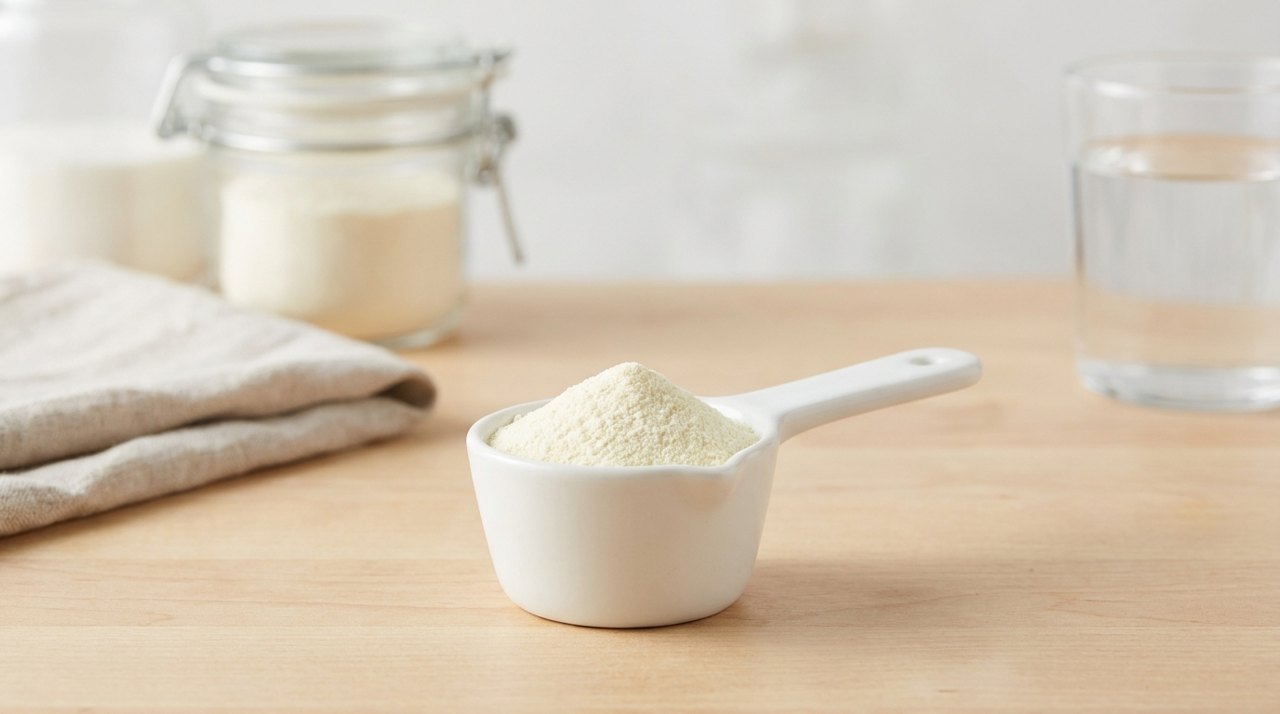
When shopping for a bovine colostrum supplement, you will quickly notice one specific acronym plastered across product labels: IgG. Immunoglobulin G (IgG) is the most abundant antibody found in colostrum, and manufacturers use its concentration as the primary measure of quality and potency. But with products advertising anywhere from 10% to 50% IgG, it can be difficult to know what you are actually paying for. If you are looking for a simple buying benchmark, the industry standard for a high-quality, minimally processed colostrum supplement sits between 15% and 25% IgG, with 20% being the most reliable baseline.
What is IgG and Why Does It Matter?
Bovine colostrum is a complex fluid packed with macronutrients, vitamins, and bioactive compounds. Among these bioactives are immunoglobulins, which are specialized proteins utilized by the immune system. In cows, Immunoglobulin G (IgG) makes up the vast majority of these proteins.
In dietary supplements, IgG serves as a standardized marker of quality. Because genuine first-milking colostrum is naturally rich in IgG, measuring its percentage helps verify that a supplement is actually colostrum and not just diluted, later-stage transitional milk. While colostrum is a dietary supplement and is never intended to treat, cure, or prevent any disease, some studies suggest that the IgG in bovine colostrum may help support gut lining integrity and promote normal, healthy immune function in humans.
The Standard Benchmark: 15% to 25% IgG
When you look at a supplement facts panel, you want to see a guaranteed, standardized amount of IgG. For most general health and wellness purposes, a range of 15% to 25% is the sweet spot. This benchmark reflects the natural composition of high-quality, whole bovine colostrum collected within the first few hours after calving.
Here is a quick breakdown of what different IgG percentages generally indicate about a product:
| IgG Percentage | Product Profile | What It Means for the Buyer |
|---|---|---|
| Under 15% | Transitional Milk / Lower Grade | The product may have been collected late (24+ hours after calving) or heavily diluted with standard milk. It generally offers lower potency. |
| 15% to 25% | Standard First-Milking Colostrum | This is the industry benchmark. It indicates genuine, early colostrum that retains its natural balance of fats, proteins, and beneficial compounds. |
| 30% to 50%+ | Concentrated / Fractionated Extract | The colostrum has been highly processed to isolate and concentrate IgG. While potent in antibodies, it may lack the full spectrum of natural co-factors. |
Shopping for colostrum? Our current best-value pick is BIOMIXA grass-fed colostrum powder on Amazon.
Is a Higher IgG Percentage Always Better?
It is tempting to assume that a supplement boasting 40% or 50% IgG is automatically superior to one with 20%. However, higher is not strictly better; it is simply different. To achieve an exceptionally high IgG concentration, manufacturers must aggressively process the colostrum to strip away fats and other proteins.
While this yields a product highly concentrated in antibodies, some nutritional experts argue that it compromises the "whole food" synergy of the supplement. Natural colostrum contains other valuable components, such as proline-rich polypeptides (PRPs), lactoferrin, and naturally occurring fats that may aid in absorption. If a product is fractionated to push the IgG to 45%, you may be losing out on those other beneficial compounds. For a daily wellness routine, a natural 20% IgG product is usually more than sufficient.
The Math: Percentage vs. Total Serving Size
Another crucial factor to consider is how the IgG percentage interacts with the serving size. A high percentage means very little if the actual dose is tiny. To find the true value of a supplement, you need to calculate the total milligrams of IgG you are getting per serving.
Consider this comparison:
- Product A: A powder supplement with 20% IgG. The serving size is 2,000 mg (2 grams). Total yield: 400 mg of IgG.
- Product B: A capsule supplement with 40% IgG. The serving size is 500 mg (1 capsule). Total yield: 200 mg of IgG.
Even though Product B has double the concentration, Product A delivers twice the amount of actual IgG per serving. This mathematical reality is one of the main reasons many buyers prefer bulk powders over pills. If you are unsure which format is right for your routine, reading up on the differences between powder vs. capsules can help clarify how serving sizes impact your daily intake.
Other Quality Markers to Look For
While the 20% IgG benchmark is a fantastic starting point, it should not be the only criteria you use to evaluate a product. The way the colostrum is handled is just as important as its chemical composition. Immunoglobulins are delicate proteins that can be easily denatured (destroyed) by high temperatures. Therefore, it is critical to look for products that specify "low-heat processing" or "spray-dried at low temperatures."
Additionally, look for brands that utilize third-party laboratory testing to verify their IgG claims. It is easy for a brand to print "20% IgG" on a label, but an independent Certificate of Analysis (CoA) proves that the active compounds survived the manufacturing process. For a deeper dive into evaluating testing methods, sourcing ethics, and processing standards, our comprehensive buyer's guide offers a step-by-step checklist.
Summary: How to Read the Label
When you are ready to make a purchase, keep these practical tips in mind to ensure you are getting a quality supplement:
- Check the Supplement Facts: Look for a standardized claim of 15% to 25% IgG. 20% is the ideal benchmark for whole colostrum.
- Do the Math: Multiply the serving size (in milligrams) by the IgG percentage to find out exactly how much active IgG you are consuming per dose.
- Verify the Processing: Ensure the label mentions low-heat processing so you know the IgG remains intact and bioavailable.
- Consider the Source: Look for first-milking colostrum (collected within 4 to 6 hours), which naturally hits the 20% benchmark without the need for artificial concentration.
By using the 20% IgG benchmark as your baseline, you can easily filter out diluted, low-quality products and choose a colostrum supplement that offers genuine value and potential nutritional support.
BIOMIXA Bluegrass Colostrum
A grass-fed, unflavored colostrum powder that balances quality and price well — our pick for the best bang for your buck. Check the current price and reviews on Amazon.